Today I post a video with Rei Ishida's thorough explanation on how to make bingata. (I am sorry there are no English subtitles to the video yet). It was filmed in the Shiroma Bingata Studio, one of the oldest workshops in Okinawa, Shuri. Rei Ishida was working there for ten years. She is a very talented young artist, has won the best design price at the Ryukyu Bank Bingata Contest (a big yearly contest for innovative young artists) in 2011. This year she moved back to her home, Ooita (Kyushu) and started her own studio.
Fukugi is a strong tree, very common in Okinawa. The name means "tree of good fortune". An Okinawan elder explained to me that in old times these trees meant a very good protection agains the strong winds of the typhoon. Whose house was surrounded by fukugi trees was lucky, because his home was spared from the devastation of the typhoons. Hence the name: tree of good fortune. 福木は沖縄でよく見える強い木です。昔は、お家の周りに福木をたくさん植えた人はラッキでした:台風が来たら、この強い木で家が守られました。それで、福木と言う名前がつけられたらしいです。
Today there are very few areas on the main island with old villages hidden among fukugi trees. One such area is Bise, just north from the famous Churaumi Aquarium. For anyone who would like to get a glimpse into old Okinawa or who likes to listen to the music of the wind among trees, I recommend a visit to the area. 今日は福木の中で隠れたお家の村が沖縄で少なくなっています。本部半島の備瀬は一番有名なところかもしれません。昔の沖縄の雰囲気を覗きたい人、
あるいは木漏れ日を眺めたり、風邪の音色を聞いたりするのが好きな人には絶対
おすすめします。
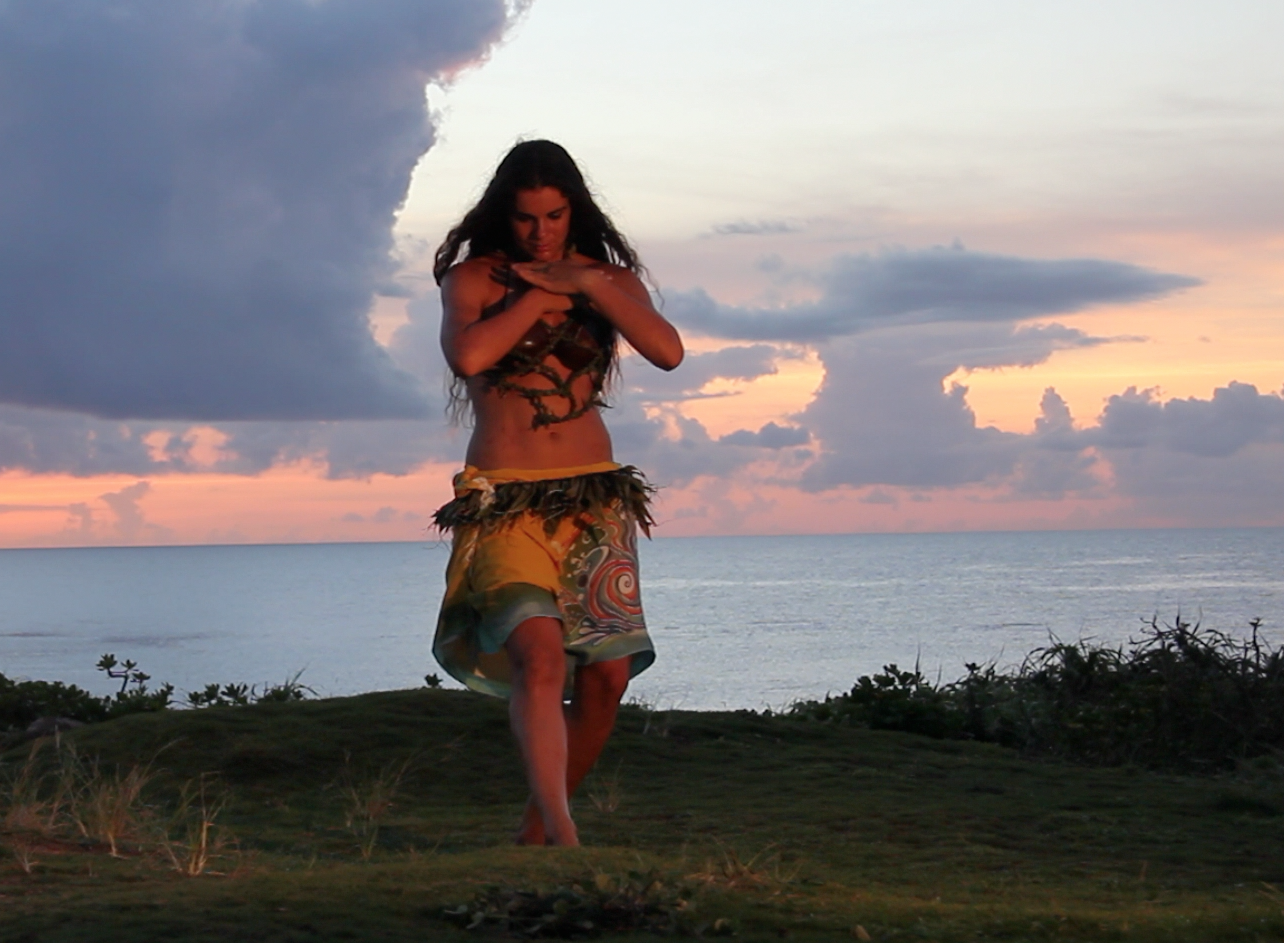
Fukugi has been very important in old times for textile dying too. However surprising it might be, beautiful bright yellow color can be obtained from the bark of the fukugi tree. We used fukugi to dye the bingata costumes for Under the Same Sun too.
Bingata's beauty lies in its vivid colours, so in order to learn where these colours come from I wanted to challenge myself and do it the old way: dye with fukugi bark. With the help of an adventurous bingata artist, Ishida Rei and with the support of Ishigaki Akiko and the Shiroma Bingata Studio it all became possible.
The process is long and difficult, but it is worth the hassle. Plus, as Hundertwasser says: "With ready made colours you cannot work well. They are manufactured by somebody else, they lose creativity."
First, we met Ishigaki Akiko, who is a weaver in the remote island of Iriomote. She and her high quality works are well known and highly estimated all around Japan. She uses natural dyes.
I will never forget what she said about weaving: "Weaving starts with planting a mulberry tree for the silkworms. Good work takes a lot of time and you have to be in harmony with the land".
She gave us two boxfuls of fukugi tree bark to experiment with. She said they cut the bark of the tree while the tree is still alive - you have to be gentle and know how much and from where you can take the bark, and then the tree can recover and grow on. This way you don't need to cut out a tree in order to have materials for dyeing.
The next step is to boil the tree bark for one whole day. Then the yellowish, rather ugly liquid should be filtered two or three times. The next day we applied it on the textile. We put on three layers of colour, but it was still no more than a dull ocre. Then we applied alum on the textile and it was a miracle: as the textile dried and the two materials mixed, the colour changed to a strong and bright yellow.
Finally, we washed the textile in the sea (it was needed for other reasons, not for the yellow) and the colour got even brighter in the salty water. The picture above was taken right after the costume bathed in the sea.
Even now, every time I wear or I wash the costume, I notice some change in the colour. It looks like the natural dye is alive and (like us humans) changes according to its environment.
Himene means song in Tahitian. There are several traditional styles, like the Himene Tarava or the Himene Ruau.
We have heard some interesting details about their history from Heremoana Maamaatuaiahutapu, the director of the House of Culture (Te Fare Tahiti Nui) in Papeete.
We had the chance to participate in the celebration of Matari'i Ni'a in Papenoo. Matari'i Ni'a is the name of a constellation (Pleiades) and its appearance marks the beginning of the abundant season in Tahiti. The festivities start in Papenoo, with singing, dancing and a ceremony where the villagers bring their first harvest as an offering. Then they sit in a circle and drink kava, a Samoan intoxicant drink (similar to the Mate in South America), widely used in ceremonies in Polynesia.
Since the weather was rainy and the ceremony was held under the stars, he quality of the footage is not the best - where the pictures are not clear, please enjoy the music.
We were lucky enough to go to the beautiful island of Moorea. It is only about 30 minutes by boat from Papeete, the Tahitian capital, but it is like a different world. Beautiful sea, white beaches, lush green mountains. A laid back island with unbelievable scenery.
The first people we met in the port were drummers, practicing which of course was exciting for us! After listening to them for some time they asked if we want to play together, which we took as a great honour. Obviously our speed and skills was not much compared to theirs, but they were nice, welcoming and accomodating. We had lots of fun playing together with them, and it seemed they enjoyed the funny foreigners too.
It all started with two lovely old Tahitian ladies, our hosts. Mama Erena, who was a dancer and Tanti Coucou, a singer. They had a hard time remembering our Hungarian names, so they decided to give us Tahitian names. One morning at the breakfast they told us they gave us the names and they sounded serious about it. I received the name Maire, meaning green fern, a plant they use very often to make costumes. Hunor's Tahitian name is Hirinaki. It means "someone you can lean on". It might be just a coincidence, but I was surprised that after such a short time they could give him such a fitting name.
I was very touched by this simple gesture and I took our new names seriously. Why was it so important for me? First of all because I felt we got involved into an old, oral tradition. Second, because I love and respect the ladies. I love that every night they talk, sing, tell each other stories and laugh together in bed. They are lighthearted, happy and when I hear them talk and laugh they sound so young.
On the last day before we left, Coucou, the singer brought her ukulele and sang us a few songs. With her flower behind her ear she looked lovely and you would never guess she just turned 82.
I am very happy i got to meet the Mamas and I take my name and her songs with me as presents from them...
We are back from Tahiti for a week now, it has been a busy week because i had to start editing the many hours of footage we have to finish up our movie!
We had a very special time in Polynesia, we met wonderful people, great dancers and saw amazing places. We walked, swam, hitchhiked and sat on a boat a lot. We ate lots and lots of coconuts and we asked many questions :)
We have a lot of videos, and i suppose not everything that is worth publishing can fit into our 15 minute video so i am planning to post some of our interesting, informative or funny short films on youtube and here, so stay with us for more ;)
Only three days left and we are heading to Tahiti. The way this project is evolving is a miracle. I just stand and watch. Well, I do work, but i feel like a greater power is in motion here...
Anyways, i would like to write a few words about the "Rainbow Mountain" dance that is part of the project.
In Tahitian dancing, the hand movements are very important. Usually the hands tell the story while the continuous movement of the hips follow the rhythm. If you look at the dance and the lyrics carefully, you can see they unfold together.